
A size 312 hearing aid battery comes in a box that promises three to ten days. Mine has hit both ends of that range in the same month, in the exact same pair of hearing aids.
Quick disclosure before anything else — a few of the links below are affiliate links, and I earn a small commission if you buy through them, at no extra cost to you. I only talk about hearing supplements I've actually used alongside my own hearing aids, and I'm not a doctor or an audiologist. Nothing here replaces what your own professional tells you about your ears.
The Three-to-Ten-Day Myth
Here's the myth almost every new hearing aid wearer believes: that battery life is a fixed number, like swapping a smoke detector battery twice a year on a schedule you can set and forget. Hearing aid maintenance doesn't work that way, and the sooner you stop expecting it to, the less often you'll get caught mid-sentence with a dead aid. The three-to-ten-day window printed on the box isn't a guarantee. It's closer to a weather forecast — true on average, wrong constantly in the specifics that actually affect your week. For anyone navigating hearing loss after fifty, that gap between "average" and "your Tuesday" is where the real frustration of this hearing loss lifestyle lives.
Hearing Aid Maintenance Starts With Letting the Battery Breathe
Most hearing aids run on standard zinc-air battery cells — sizes 10, 312, 13, or 675 — and mine are the 312s, the ones under the brown tab. These aren't like a flashlight battery sitting fully charged in its wrapper. They're air-breathers. The cell is rated at a nominal 1.45V, but it doesn't actually reach that strength until oxygen works its way into the chemistry through tiny holes exposed when you peel the tab. Pull that tab and jam the battery straight into the aid — which is exactly what I did for months — and you're starting the thing at half strength before it's even had a chance.

My friend Kwok-Wing heard me explaining this at the kitchen table and got that look he gets — he's the sort who keeps a small whiteboard by his back door just to diagram things until they make sense to him, a habit left over from years in a science classroom. Within a minute he'd sketched the whole oxygen-to-chemistry reaction and asked, reasonably, why the battery companies don't just print "wait five minutes" on the package instead of burying it in the instruction booklet. I didn't have a good answer. I just know that since I started giving the battery those five minutes on the counter before closing the door, my batteries stopped dying within the hour, and that's reason enough for me.
Skipping that wait felt like a small shortcut until I noticed how often I was swapping batteries at the worst possible moments — mid-sentence, mid-dinner, mid-whatever my granddaughter was trying to tell me. I've written elsewhere about reclaiming my spot at the family table, and the honest truth is that half of staying present there isn't the hearing aid itself. It's the unglamorous five minutes of maintenance behind it.
Cold Air Changes the Math
Temperature is the variable nobody mentions when they hand you that color-coded battery pack. Zinc-air cells slow down in the cold because the chemical reaction powering them needs warmth as much as it needs oxygen — so the same battery that lasts a week on your nightstand can be noticeably weaker after an hour outside in a New England winter.
I found this out walking the open-air stretch at Derby Street Shoppes in Hingham on a bitter afternoon, just running errands, nothing dramatic. By the time I got back to the car, my hearing aids had already dropped to a low-battery chime — hours ahead of schedule. Nothing was wrong with the batteries. The cold had simply sped up a reaction that works better warm. Now I pack a spare set whenever I know I'll be outside for a while in the colder months, the same way I'd check tire pressure before a long drive.
Why Do Humidity and Bluetooth Drain Batteries Faster?
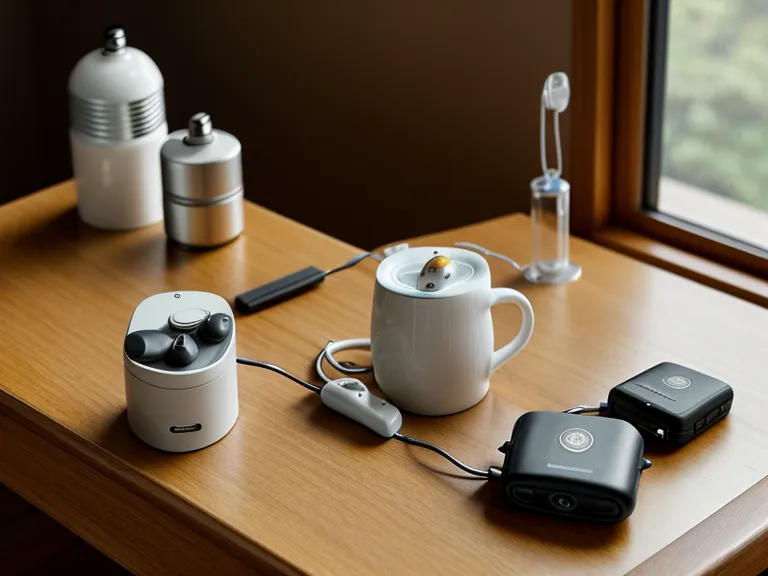
New England summers bring their own problem: humidity thick enough to wear like a coat. Zinc-air batteries are sensitive to moisture in the air — too much and they can "weep" power away before you've used half their charge, too little and they dry out early. A small dehumidifier jar for overnight storage made a real difference for me here, more than I expected from something that small.
Streaming audio is the other quiet drain. My grandkids love a video call, and so do I, but piping sound straight to a hearing aid over Bluetooth is demanding work for a tiny battery. An hour of streaming can visibly move the percentage on my app. Heavy streamers should expect to be changing batteries every three to four days, regardless of what the box claims — that's just the cost of the convenience.
Supplements Changed My Volume Habit, Not the Battery Itself
Something else surprised me: on days when I felt mentally foggy, I was cranking my hearing aid volume higher, not because the room was quieter but because my brain was working harder to sort out the sound. Higher volume drains a battery faster, full stop. So I started looking into auditory support options instead of just turning a dial, and that's how I ended up trying Audifort. It didn't "fix" anything — I want to be careful about that word — but on the days it seemed to take the edge off the mental fog, I noticed I wasn't maxing out the volume just to keep up with a conversation. Less volume, less strain on the battery. That's the whole mechanism, and it's a modest one.
I tried ZenCortex for a stretch too, since it's marketed around the brain-ear connection, but it didn't move the needle for me the way Audifort did, so I went back to the one that actually fit my morning routine. Your results may differ — this is one grandfather's experience, not a guarantee.
Stop Trusting the Box
None of this means batteries are the real issue, and sometimes they aren't the issue at all. I spent a stretch convinced my hearing was failing me specifically at a certain volume of family gatherings, so I asked everyone to just text me instead of calling and quietly stopped going to group dinners for a while. That didn't fix anything — it just left me more isolated and no closer to understanding what was actually going on with my batteries or my ears. Avoiding the problem is not the same as solving it, and I wasted real time learning that the hard way.
Keeping my weekly log isn't about chasing a perfect number — it's the only honest way to see which variable is actually at play on a given day. I think about a woman named Beatrix when I write pieces like this — someone I met years ago in an audiology waiting room, already years into wearing hearing aids, who wanted the real next steps instead of the beginner pitch. If that's you too: stop trusting the "3 to 10 days" on the box as a promise. Treat it as a starting guess, account for cold, humidity, streaming, and your own volume habits, and keep a spare battery in your pocket anyway. Standing in a Stop & Shop aisle recently, I turned toward my wife before she'd even finished saying my name — small proof the system, batteries included, was finally working the way it's supposed to. You can check out Audifort here if you want to see what I use to support the "inside" half of that equation. Talk to your own doctor first, and keep tracking what actually works for you.