
Four. That's how many times I had to ask my wife where she'd put the car keys before she gave up repeating it and just walked over to point instead. Somewhere in that small, ordinary moment, my hearing health stopped being a private annoyance and turned into something that was quietly deciding how much of my own family life I still got to be part of.
Before we go further, a quick disclosure: this piece contains a few affiliate links, and if you buy through one I earn a small commission at no extra cost to you. I bring up a natural supplement called Audifort because I've actually used it alongside my hearing aids, not because anyone paid me to say nice things about it. None of this replaces an actual doctor or audiologist. I'm just a retired principal comparing notes, so check with your own health professional before changing your routine.
The Mechanics of Social Isolation After Hearing Loss
Social isolation from hearing loss rarely arrives as a single dramatic event. It builds in a predictable order, the same way a small leak under a kitchen sink turns into a rotted cabinet floor if you keep mopping it up and calling it nothing. First you ask someone to repeat a sentence. Then you stop asking and start guessing from context instead, nodding at what you hope was the right moment. Somewhere after that, you begin quietly trimming the invitations you accept, skipping the noisier gathering and choosing the smaller table, and eventually you're not being left out of anything. You've already left.
Most of what gets written about age-related hearing loss focuses on the moment of diagnosis, and that part of my own story belongs to a different post entirely. What interests me here is what happens next: the social math nobody warns you about, where every conversation gets quietly scored as worth the effort or not worth it, and where "not worth it" starts winning more often than it should.
Nodding Along Feels Safer Than Asking Again
Asking someone to repeat themselves costs something every single time: a flicker of impatience, a sigh, the sense that you're the reason the conversation stalled. Nodding costs nothing in the moment. That trade looks reasonable right up until you realize you've been paying it so often that you no longer know what half your own family actually said to you last week. Restaurants make this worse first, because the background noise struggle there turns a normal dinner into constant guesswork. Phone calls bring a different kind of tired, the auditory fatigue of straining to fill in gaps your ears just didn't catch, and that's a big enough topic to deserve its own separate piece rather than a paragraph here.
My friend Kwok-Wing Lau, a retired science department head who never accepts a claim without asking for the mechanism behind it, was the one who finally called out my nodding habit for what it was. He wanted proof, not a feeling, so I started keeping an actual log instead of just trusting my mood on a given evening: restaurants, phone calls, family gatherings, scored honestly instead of guessed at.
The Decongestant Spray That Solved Nothing
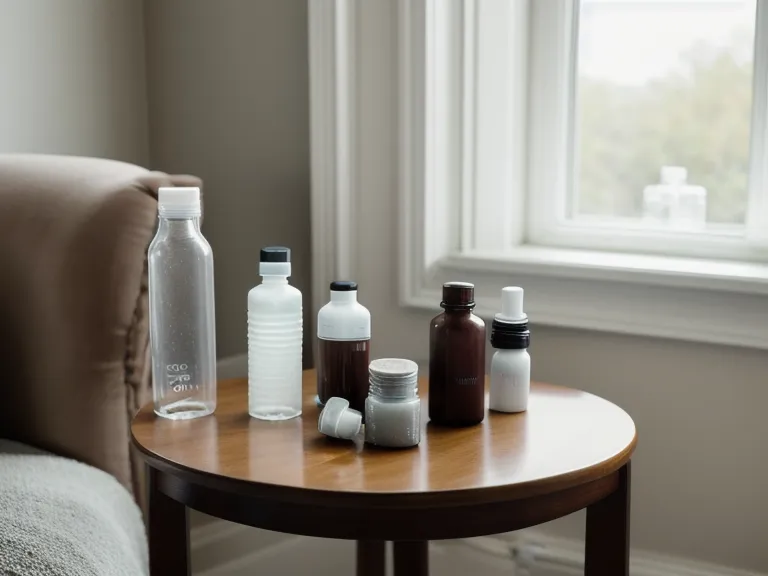
Long before any of that log-keeping started, I spent two weeks convinced my clogged sinuses were the real problem and used a nasal decongestant spray every night hoping the pressure behind my ears would just drain away. Nothing changed. Conversations were exactly as hard to follow as they'd been before I started, and the only thing the spray fixed was an issue I never actually had.
It turned out what I'd been calling a sinus problem had an actual name: Presbycusis, the ordinary age-related hearing loss that has nothing to do with drainage or pressure, and no spray was ever going to touch it. One morning not long after, the birdsong outside registered before I'd even cracked my eyes open, a small, almost silly thing to notice, except it told me something had actually shifted. Small win. I kept going.
Where Hearing Aids Stop and Supplements Start
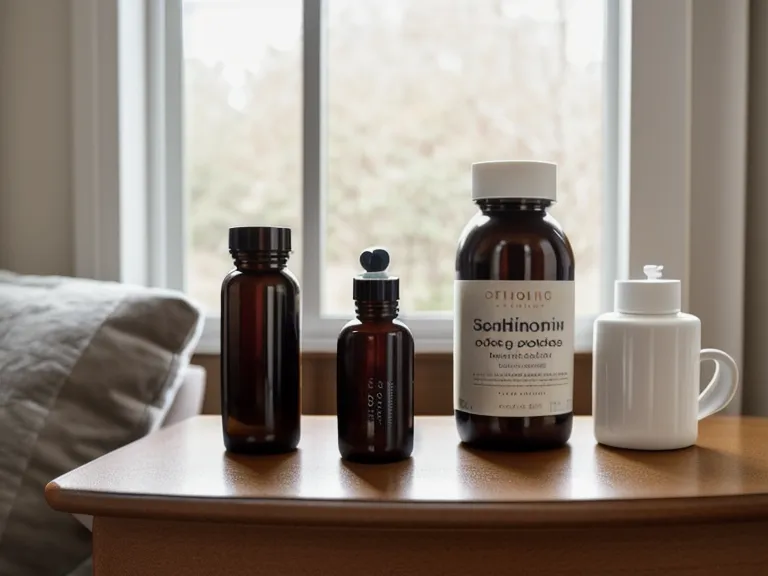
Hearing aids handle volume. They don't do much for the fatigue of constantly filling in gaps, and they don't touch whatever's happening internally that makes some frequencies feel thinner than others. Whether natural hearing supplements are worth trying at all (given how much an audiologist's skepticism can talk you out of it) is a question I've answered in full somewhere else on this site. That gap is exactly where I started looking into whether one might help, and where I began testing Audifort instead of just assuming my hardware was doing everything it could. Three years of watching that log now, and I can tell the difference between a bad night and an actual pattern within a few entries.
Whether a supplement is worth combining with a hearing aid at all is a fair question, and it's one I've answered in more detail in another piece rather than trying to cram the whole argument in here. Same goes for the bigger hearing-aids-versus-supplements debate, which is a longer conversation than this one has room for. What I can say is that keeping a simple log turned out to be the useful part: when several entries in a row show restaurants, calls, and family dinners all flatlining as "hard," that's the signal to change something, not a reason to wait it out. You can see how I actually track it in My Hearing Health Tracking Notes: What It Actually Takes to Stay in the Conversation.
Carrying a Double Kind of Isolation
Caregivers get a version of this that standard advice skips over entirely. Plenty of my retired friends are looking after a spouse with dementia, and when your own hearing is going while your partner's cognitive grip is loosening, the isolation compounds instead of just adding up. You can't hear the quiet, confused question asked at two in the morning, and they can't always tell you clearly what's wrong even if you catch every word.
Ringing that never fully quiets down at night is its own separate struggle some of my friends deal with, and that topic gets its own full treatment elsewhere rather than a mention here. What matters in this context is simpler: the people relying on you don't have the luxury of waiting for you to get around to fixing your hearing eventually. My Wife Noticed Before I Did, and staying sharp enough to catch her quieter moments has mattered more to me than almost anything else on this list.
Watching for the Turn at a Crowded Table
Big, echoing rooms do something different to clarity than a noisy restaurant does (that's a mechanism with its own full write-up elsewhere), but a retirement luncheon for a former colleague was where I actually noticed the shift, in a hall with high ceilings and easily fifty people talking over each other, about as pure a test of the Cocktail Party Effect as I've come across outside a textbook.
Somewhere around the salad course, I noticed I was actually following three people talking at once instead of nodding blind, and that felt like getting my seat back at the table rather than just occupying a chair near it. These days I can walk the Duxbury Beach boardwalk with Kwok-Wing without asking him to repeat every third sentence into the wind, which tells me more than any luncheon does. If restaurants are still your particular battlefield, that noise problem works differently than an echoing hall, and I've written about that fight separately in The Restaurant Roar.
Beatrix Haverford put it better than I could when I mentioned the luncheon to her. She's been wearing hearing aids for years longer than I have and has a knack for talking about this stuff in a way that takes the anxiety down a notch without pretending the problem isn't real. Her take was simple: a good night at a loud table doesn't mean you're fixed, it means the pieces you've put in place are doing their job.

Aging Gracefully Doesn't Mean Going Quiet
Look, aging gracefully gets sold as some calm, quiet kind of acceptance, and for hearing specifically that framing runs backwards. Going quiet is the actual danger, not the wrinkle or the gray hair, but the slow narrowing of which rooms you're willing to sit in. The clearest rule I can offer after all of this: notice when you start trimming invitations before anyone's actually stopped inviting you, because that's the early signal, not the late one.
If any part of this sounds familiar, such as the nodding, the trimmed guest list, or the quiet math of what's worth asking someone to repeat, talk to an actual professional first, and maybe look at whether a supplement like Audifort fits into what you're already doing with your hearing aids. It won't undo thirty years of noisy hallways or hand you back every sentence you've missed. But it's one more piece of not settling for the silence, and that's worth more to me than getting young again ever would be.